

Background of the Concept of Geochemical Mapping
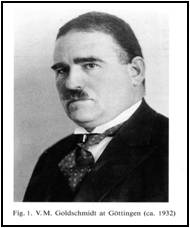
The "Father of Geochemistry," Goldschmidt, first introduced the concept of studying the distribution of elements in his 1938 bookThe Principles of Distribution of the Elements in the Earth.
The Father of Geochemistry, V. M. Goldschmidt (1888–1947)
H. E. Hawkes and J. S. Webb were pioneers in geochemical mapping and published the world’s first geochemical map, the Geochemical Atlas of Northern Ireland, in 1973.
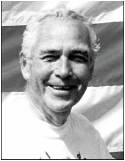
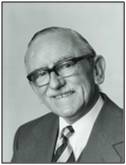
The pioneers of geochemical mapping, H. E. Hawkes (1912–1996) and J. S. Webb (1920–2007)
Xie Xuejin proposed that "Geochemical mapping is the systematic collection of a specific type of natural material according to certain standards, analyzing the content of various elements from the periodic table. By using standardized methods, geochemical maps of element spatial variations at different scales are created, providing fundamental data for basic geology, mineral exploration, environmental studies, agriculture, human health, and other fields."
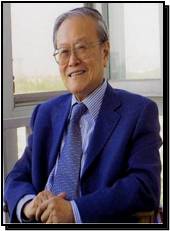
The pioneer of geochemical mapping in China, Academician Xie Xuejin (1923–2017)
China’s Role in Developing a Series of International Geochemical Mapping Guidelines